La siguiente es una breve historia del nacimiento de "Igetalloy".

Chapter 1: The Birth of "IGETALLOY" Cemented Carbides

El primer carburo cementado del mundo nació en Alemania en 1923 y fue comercializado bajo el nombre de "Widia" por Krupp en 1927. En el mismo año, Sumitomo Electric comenzó la investigación sobre carburos cementados y, al año siguiente, tuvimos éxito en la creación de un prototipo de matrices de dibujo de alambre y cable de carburo cementado. Las herramientas de corte de carburo cementado fueron comercializadas en 1931 y así nació "IGETALLOY". Antes y durante la guerra, nuestros procesos de producción únicos se centraron en el ámbito militar. Después de la guerra, nos dedicamos a encontrar oportunidades de mercado, investigaciones fundamentales y desarrollos de aplicaciones para la regeneración de IGETALLOY. Se construyeron nuevas fábricas y se promovió la introducción de tecnologías extranjeras, lo que amplió la producción y avanzó en el desarrollo de nuevos materiales y productos. Así es como se formó la base de "IGETALLOY".

Photographs and descriptions of the period

Cemented Carbide Dies and Cutting Tool
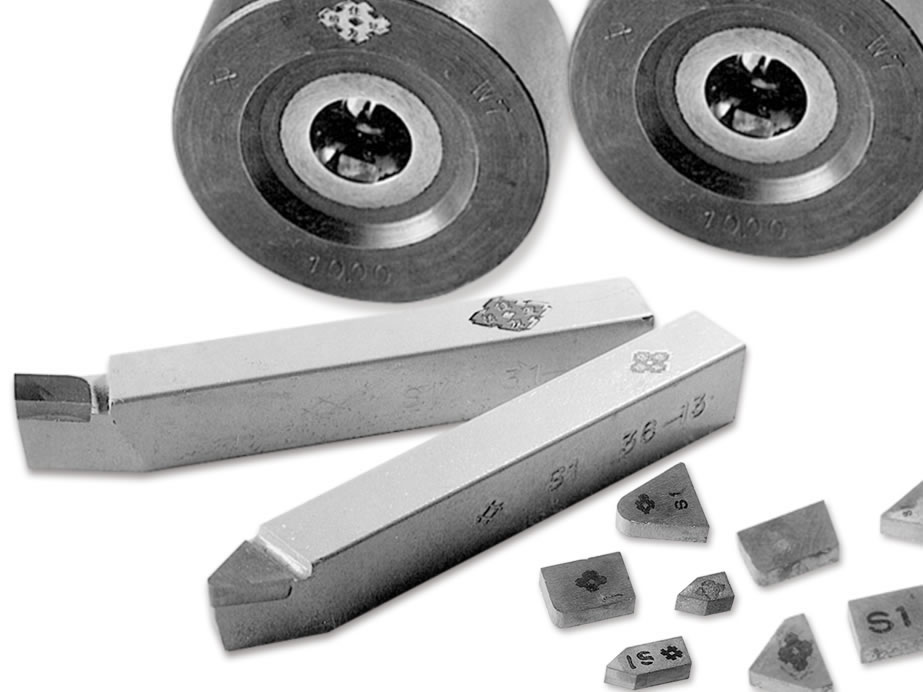
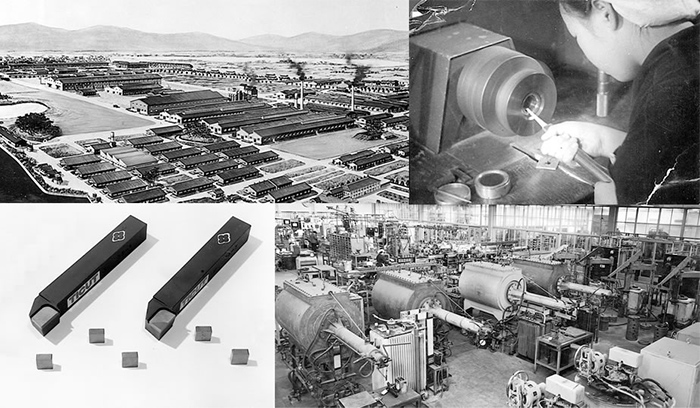
Cemented carbide dies, the origin of cemented carbide tool "IGETALLOY", were successfully produced as wire and cable drawing dies for private use in 1928 but were later commercialized in 1931. They were first exported to U.S. immediately after the war in 1947. On the other hand, cutting tools started from the research/study of bites for grooving in-house rolls, and were commercially marketed in 1931 under the brand name "IGETALLOY Hard Alloy". In 1935, we started to sell Type S steel cutting tools (which contained Ti and Ta).

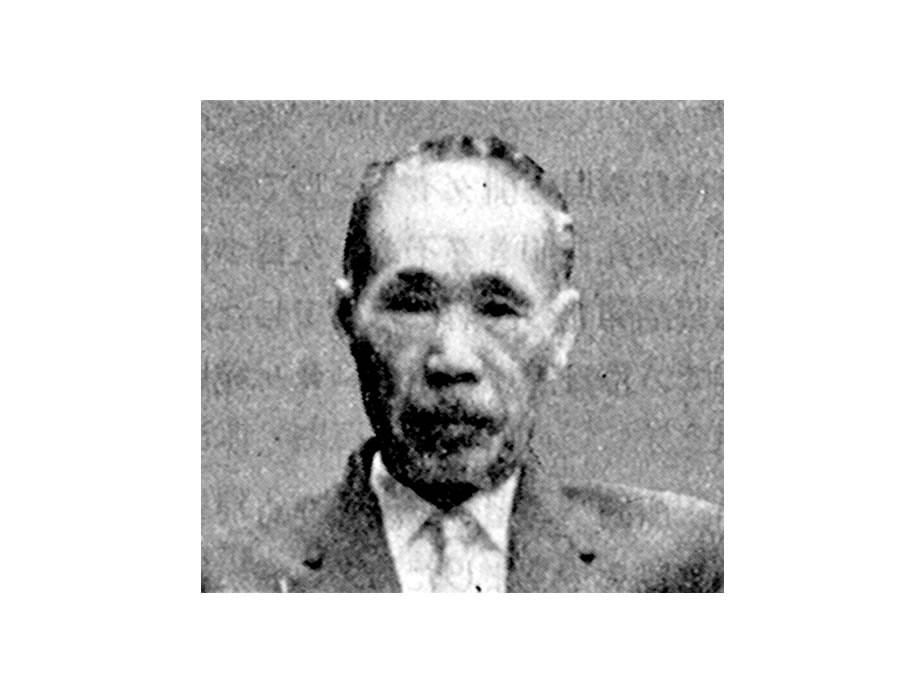
Kyukichi Shinba

A research report in October 1929 by Kyukichi Shinba (doctor of engineering who was engaged in this company from 1924 to 1947) gives us an idea of how he failed at project after project, using selected materials and refined facilities until he finally could produce cemented carbide in his own way.

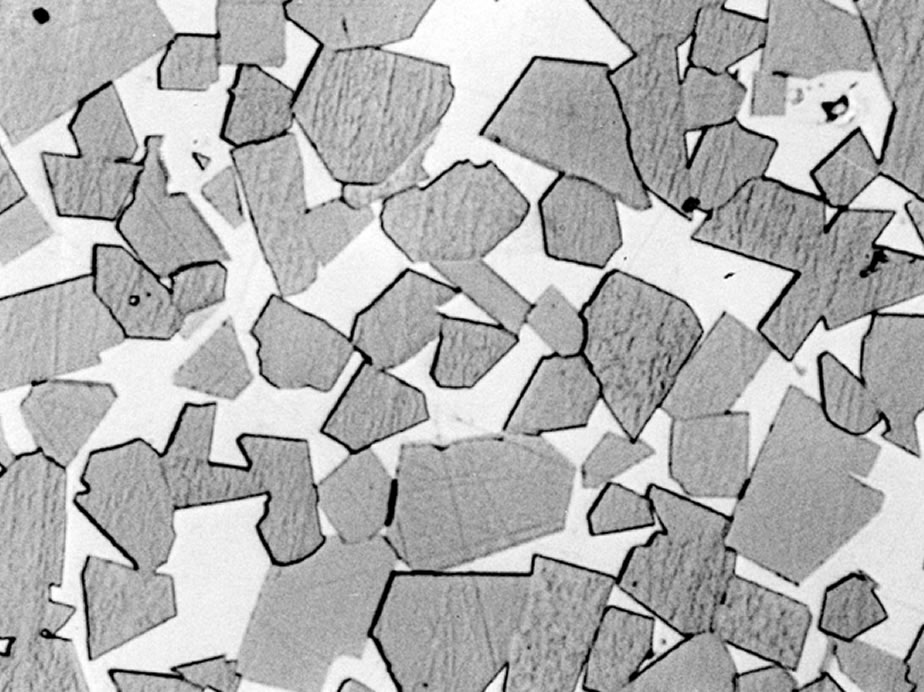
Wc-Co Composition Photo (Example)

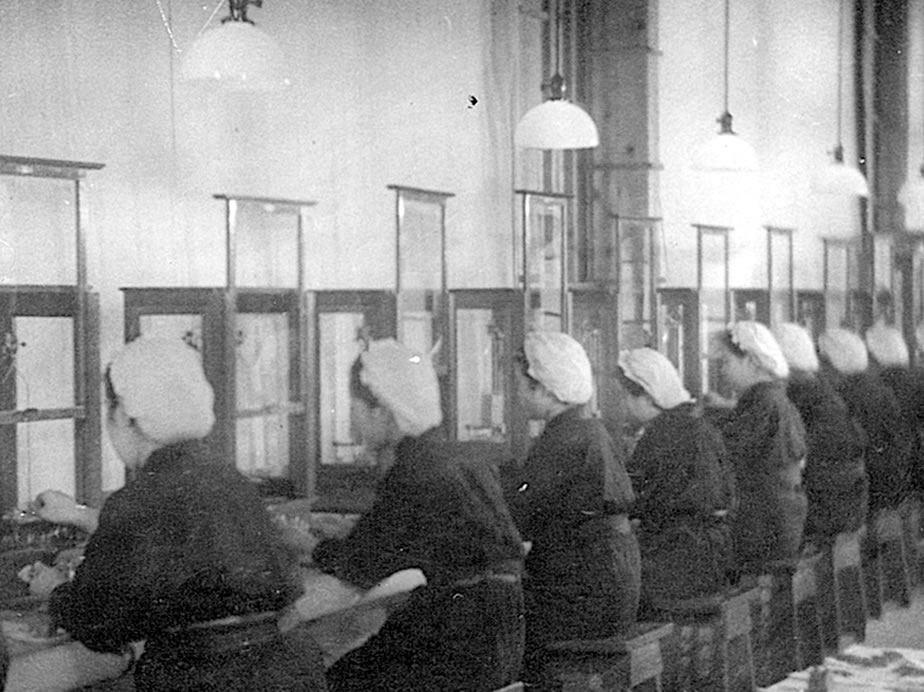
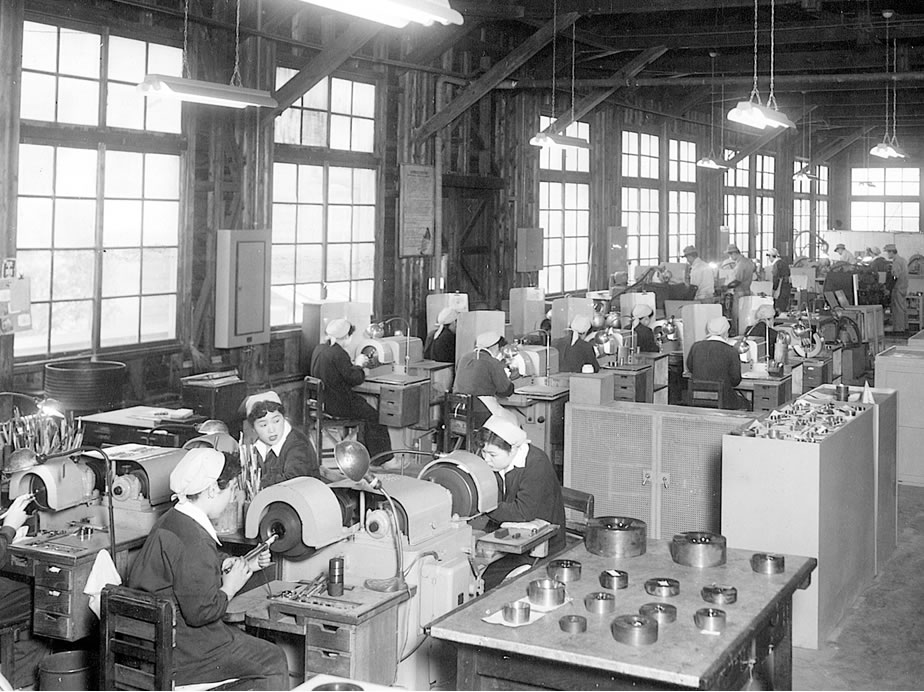
Production in wartime (around 1941)
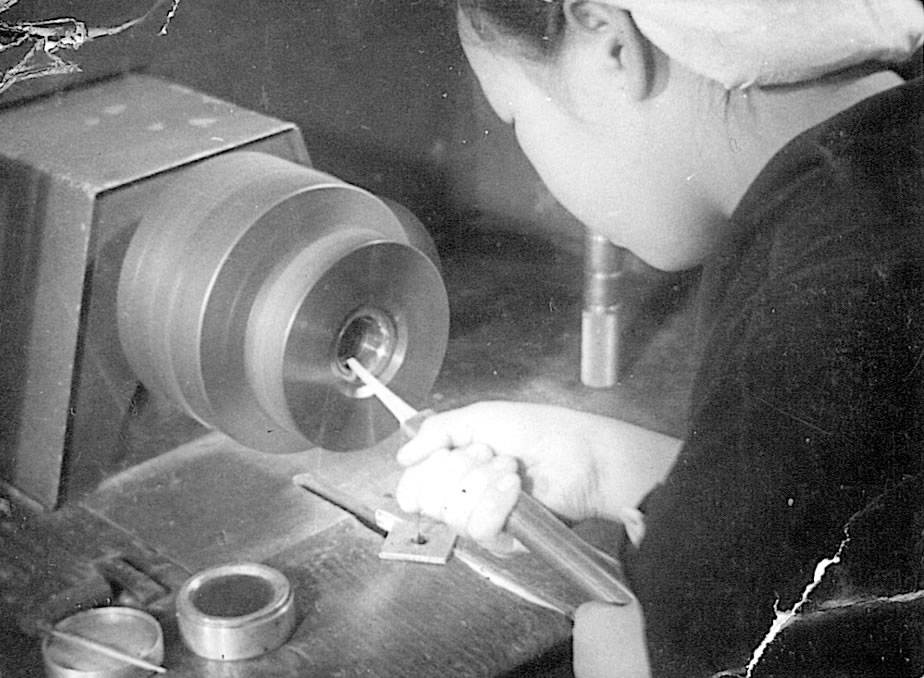
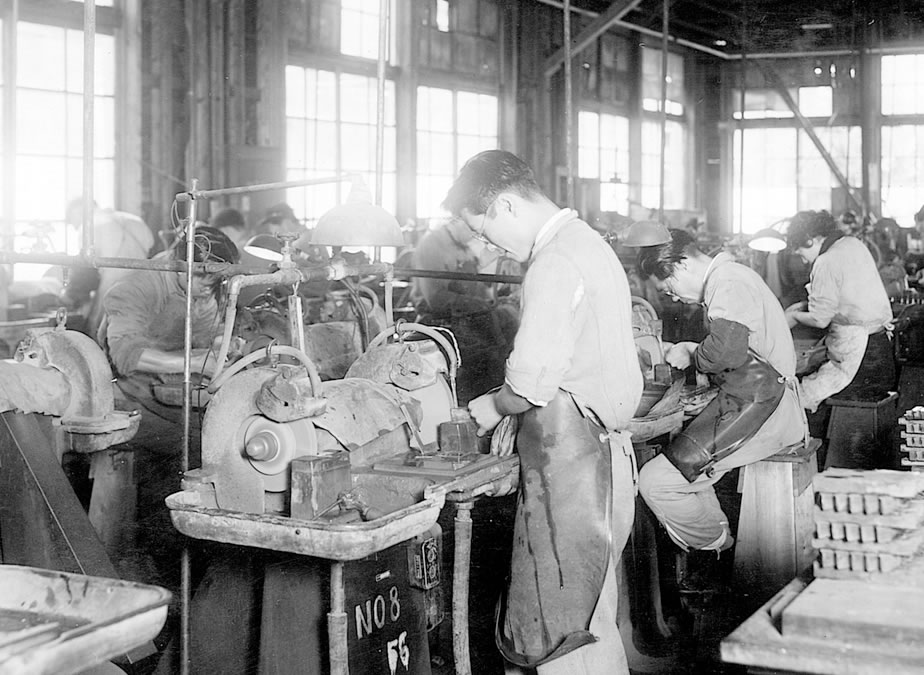
Production scene of carbide dies polishing operations with women inspectors sitting side-by-side. In recorded history, 1,200 male workers and 880 female workers were engaged in producing IGETALLOY in 1944, producing two tons of it monthly.

Production in wartime (around 1941)

Production scene of carbide dies polishing operations with women inspectors sitting side-by-side. In recorded history, 1,200 male workers and 880 female workers were engaged in producing IGETALLOY in 1944, producing two tons of it monthly.

Introduction of Mining Tools

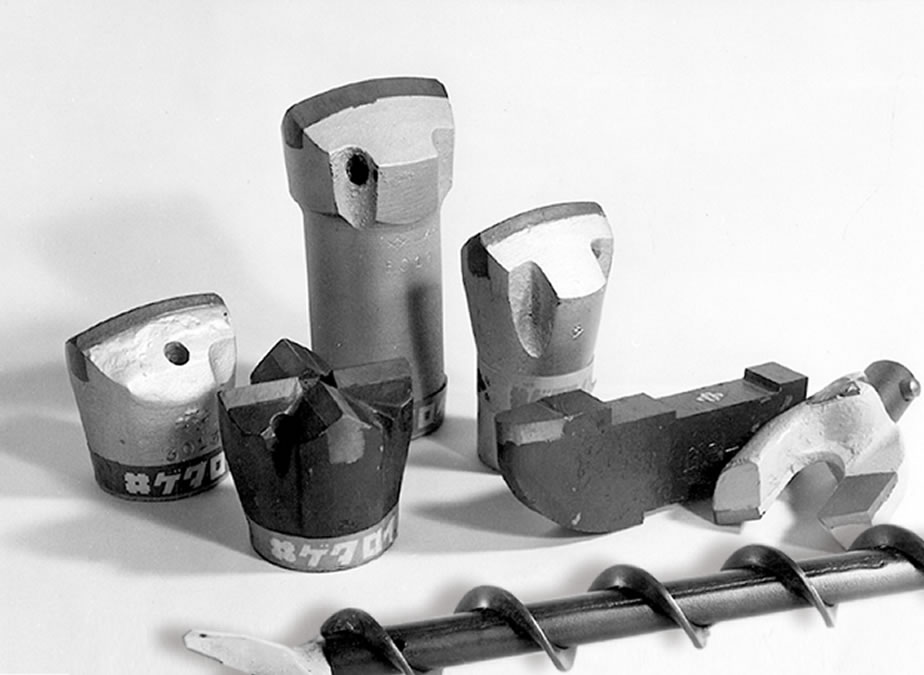
In the postwar reconstruction period, to address the increase in coal production policies, mining tools for coal mining and rock drilling such as "auger drill", "coal cutter bit" and "rock bit" were developed as top-priority issues paving the way for IGETALLOY's new usage as it entered its peak.

Bird's-eye View of Itami Works from South West (around 1952)
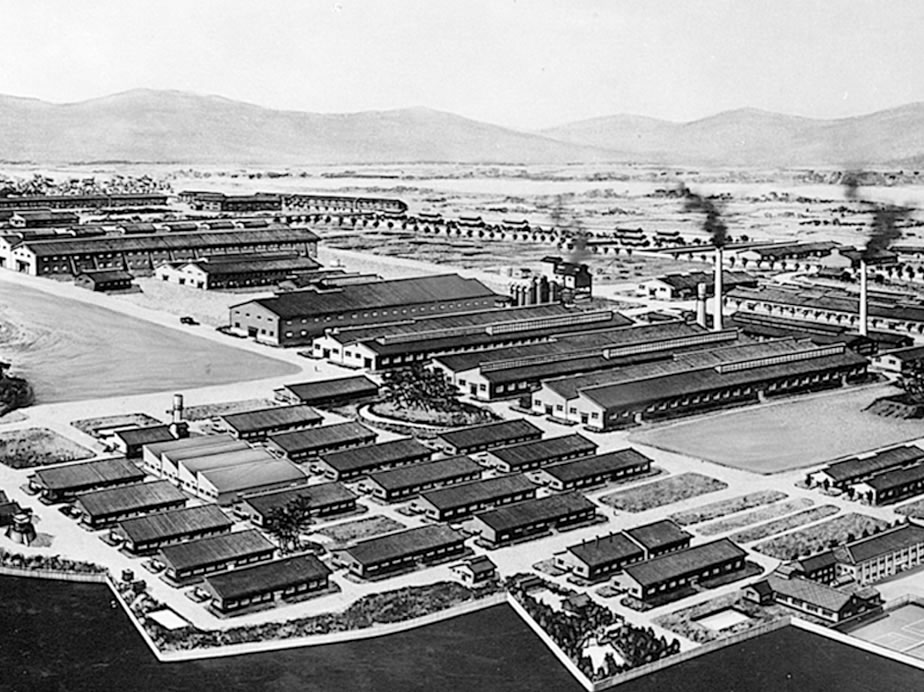
Itami Works started operations in March 1941 in response to increased production of IGETALLOY. The IGETALLOY factory kept full production mainly for military demands during wartime, but demands decreased significantly right after the war. Then, a special procurement boom associated with the Korean War and the roaring coal industry helped Itami Works' gradual reconstruction. Factories also started to expand and upgrade their presence. For IGETALLOY, five wooden factories were lined up from South at East side of the main alloy factory; cutter, dies, cutting tool, machinery, and inspection buildings.

Former Research Building No. 7

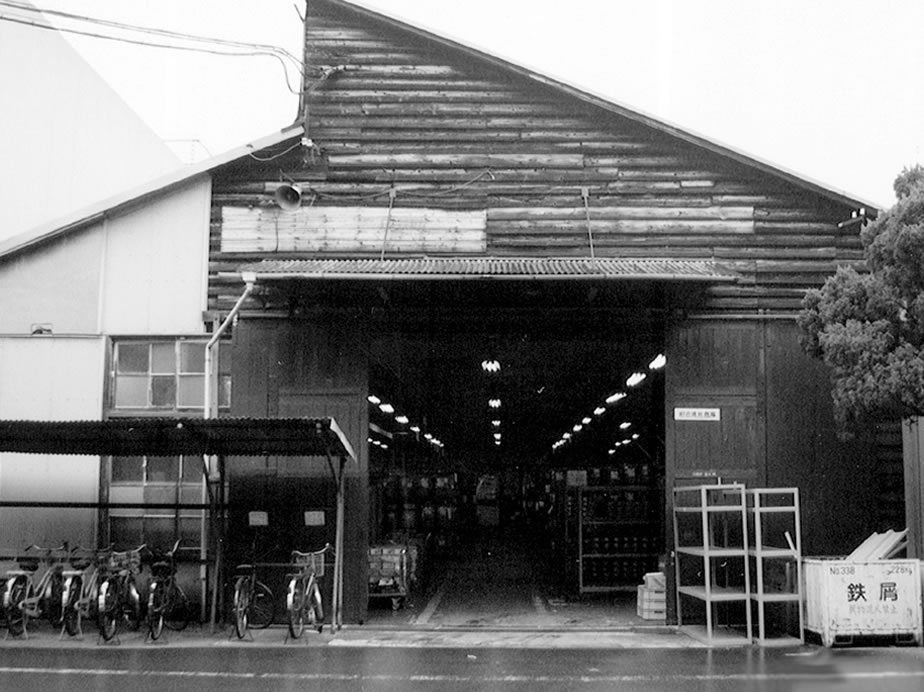
This oldest wooden building in the premises still retain some remnants of those days when Itami Works opened (currently power materials warehouse). Used as No. 7 research building (Itami 2nd. Research Section) in 1950s, where a ceramic tool "ALOX" was born.

Capítulo 2: Surgimiento de Nuevos Productos como Insertos, Portaherramientas de Torneado y Fresas

En 1956, la Encuesta Económica de Japón declaró "Ya no estamos en la posguerra...". "IGETALLOY News" se publicó por primera vez en junio de ese año. También comenzamos a lanzar la institucionalización de la "Asociación IGETALLOY" y la organización de ventas, incluida la fundación de "Reuniones de Distribuidores Nacionales", reforzando nuestras bases para actividades de ventas y publicidad. Este es el período en el que surgieron nuevos materiales de herramientas como cerámica, cermet, etc., y nuevos productos como puntas desechables (insertos intercambiables), rompevirutas y fresas (finales de la década de 1950), lo que impulsó el desarrollo de IGETALLOY desde la década de 1960. La División Hardmetal, que es la primera división de Sumitomo Electric, nació justo en este momento.

Photographs and explanations at that time

IGETALLOY Works
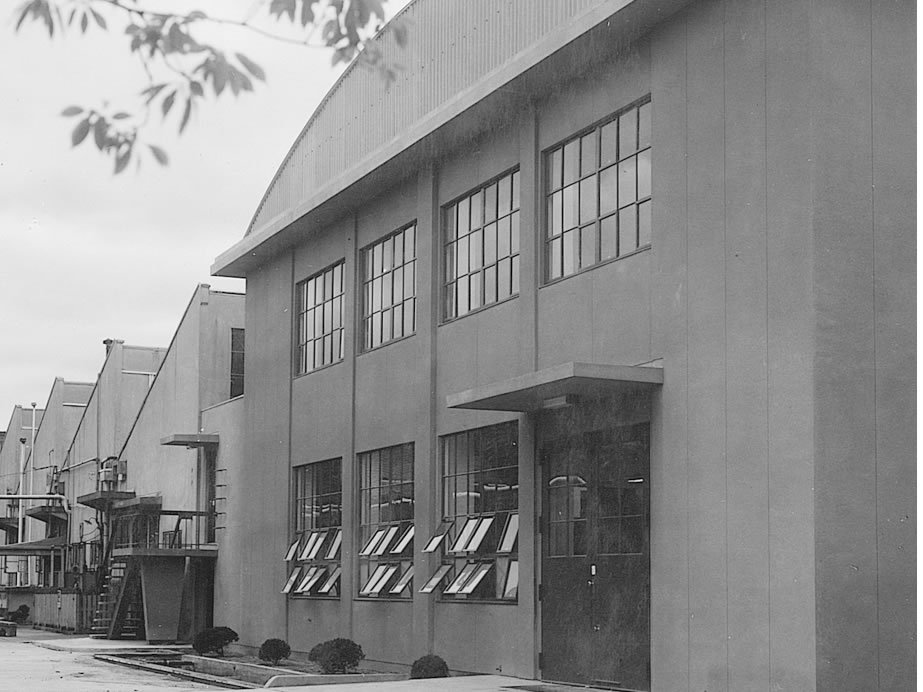
New IGETALLOY works (with the capacity of 4 tons) was built in 1952, and was expanded in succession in 1958 and 1961 to become a state-of-the-art factory with modern cemented carbide facilities. Since then, enhancement of the facilities and development of manufacturing technologies were actively driven, bringing the works to become the world's top cemented carbide factory with the peak capacity of 30 tons in terms of mass and capacity.

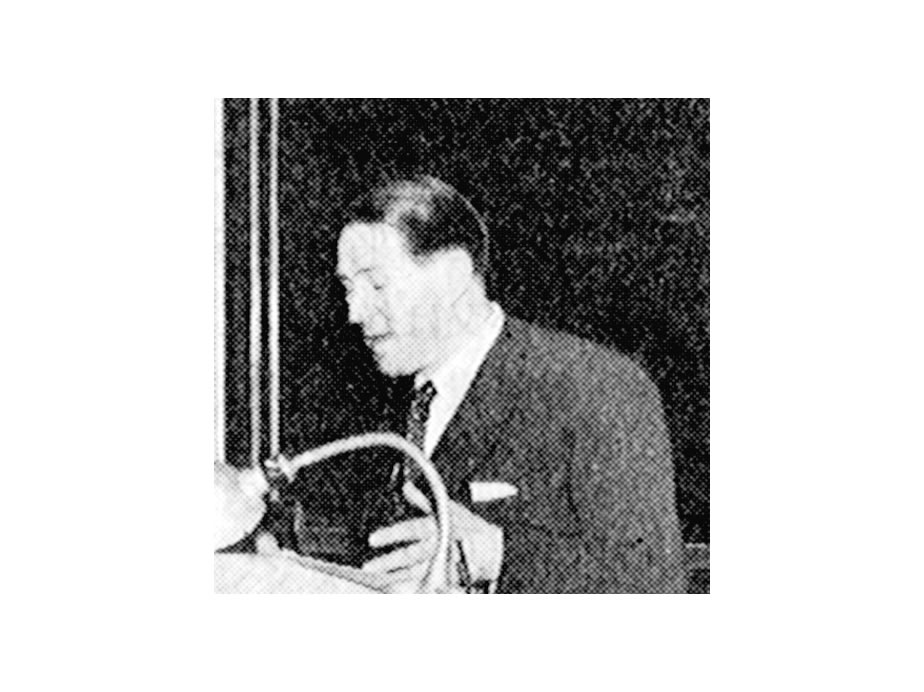
Dr. Kieffer's Speech

Picture of the world's expert Dr. Richard Kieffer (M.P) who visited us for technical training of powder metallurgy in March 1955 when he made a speech on April 9 in Osaka about "Today and tomorrow of powder metallurgy" (on his 50th birthday).

Technology Tie-up with M.P. and Release of New Grades
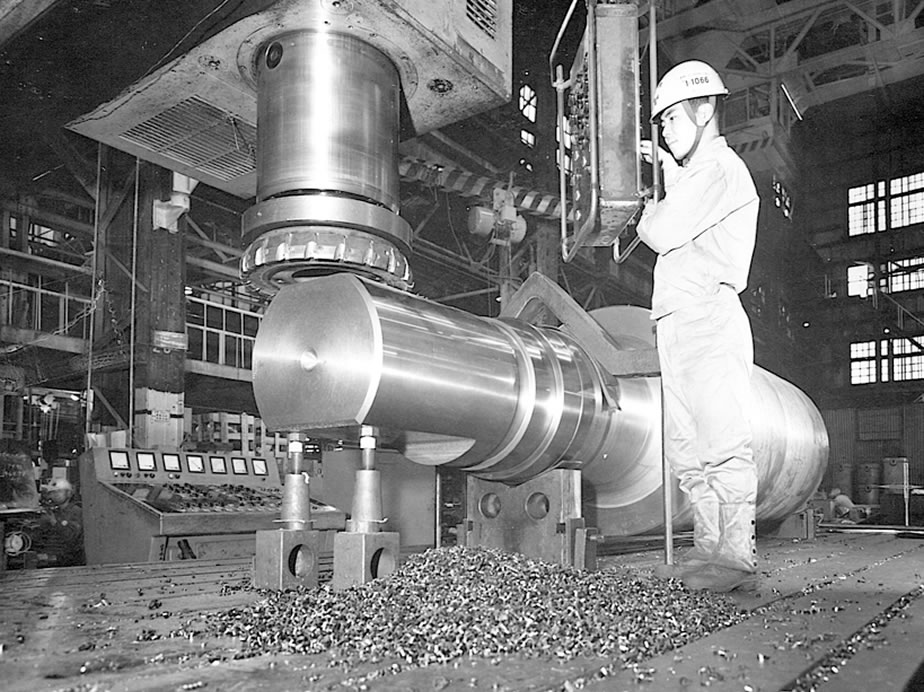
In March 1953, we signed a contract for technology introduction with Austria's Metalwerk Plansee (M.P.) and released new grades (ST, U and H types) in the following year. In addition, "A40" was released in 1959 and touted as the alloy strong enough to penetrate into the high speed steel tool's segment. Above is a snapshot of Sumitomo Metal Industries, Ltd. Osaka Steel Works where heavy cutting is performed using the new grade.

Typical Carbide Products (at the time)
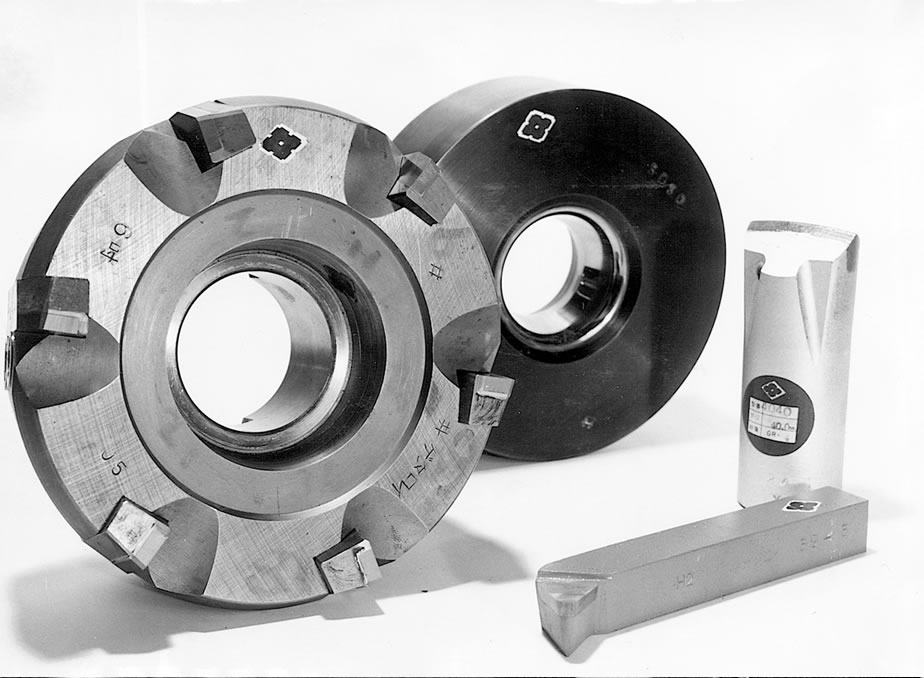
In addition to wire and cable drawing dies, pipe-drawing plugs, brazed carbide cutting tools and rock bits which were our company's forerunning specialties through the pre-war and post-war periods, we released the “MICE CUTTER” for milling in 1955 to the delight of operators on the factory floor due to it’s ease of use.

Dies Factory

Lapping (polishing) of cemented carbide dies and plugs used for wire and cable drawing and pipe drawing needed significant manpower. However, such a scene has disappeared completely today.

Cutting Tool Factory

New technologies including high-frequency brazing, cutting edge grinding with a diamond grinding wheel, cutting edge protective coating with seal peel, along with an assembly line system using roller conveyors were adopted for the production of cemented carbide cutting tools.

Cutter Factory

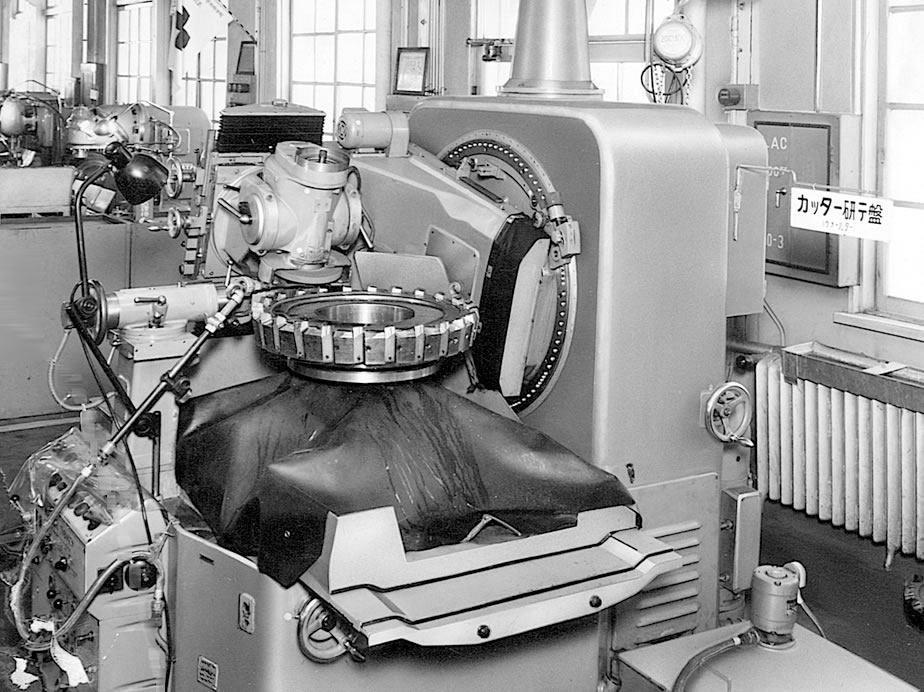
Mainly utilizing a variety of overseas manufacturers' superior grinding machines that were installed in bulk, and an electrical discharge machining that was adopted since 1950s to support complex precision tools.

IGETALLOY Machining Factory

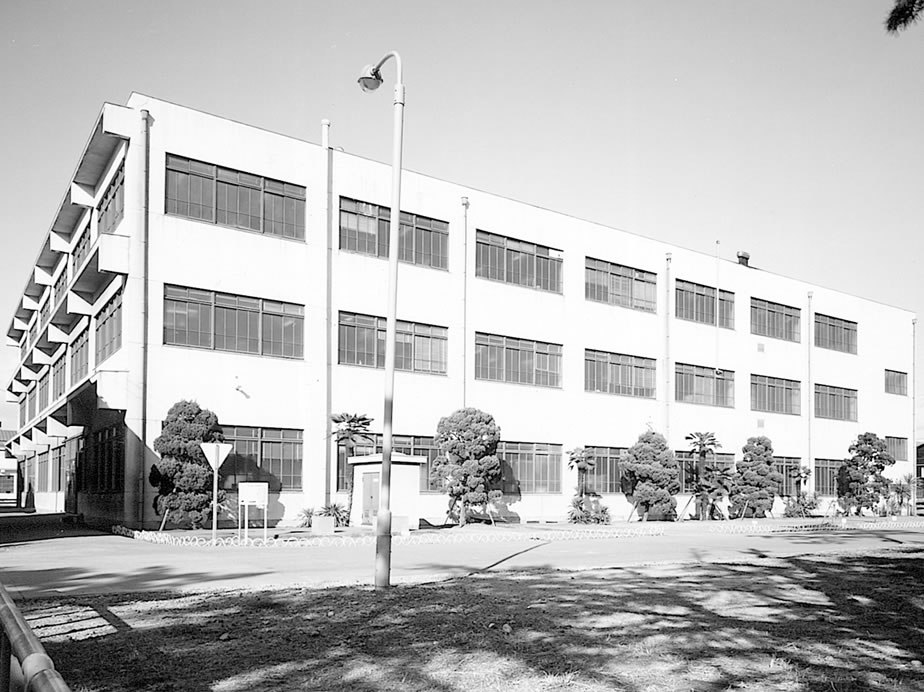
A new three-storey machining building was built adjacent to the alloy works in 1962. This streamlined production facility that accommodated precision production (1F), wear-resistant tool production (2F), and throw-away insert mass production (3F). This relocation to this building from the former wooden factories was our new start to modernization.

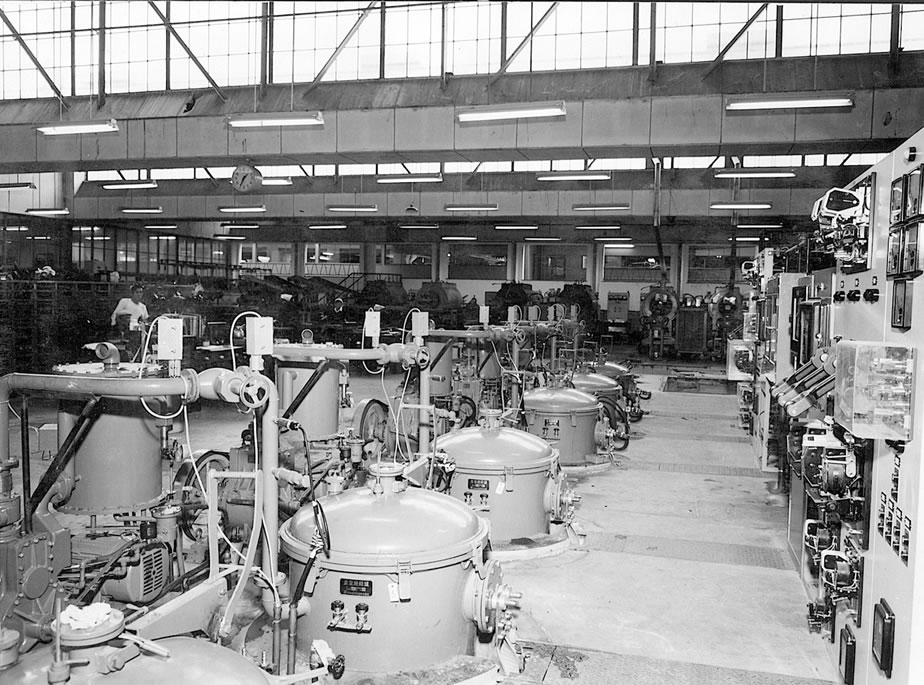
Horizontal continuous molybdenum furnace
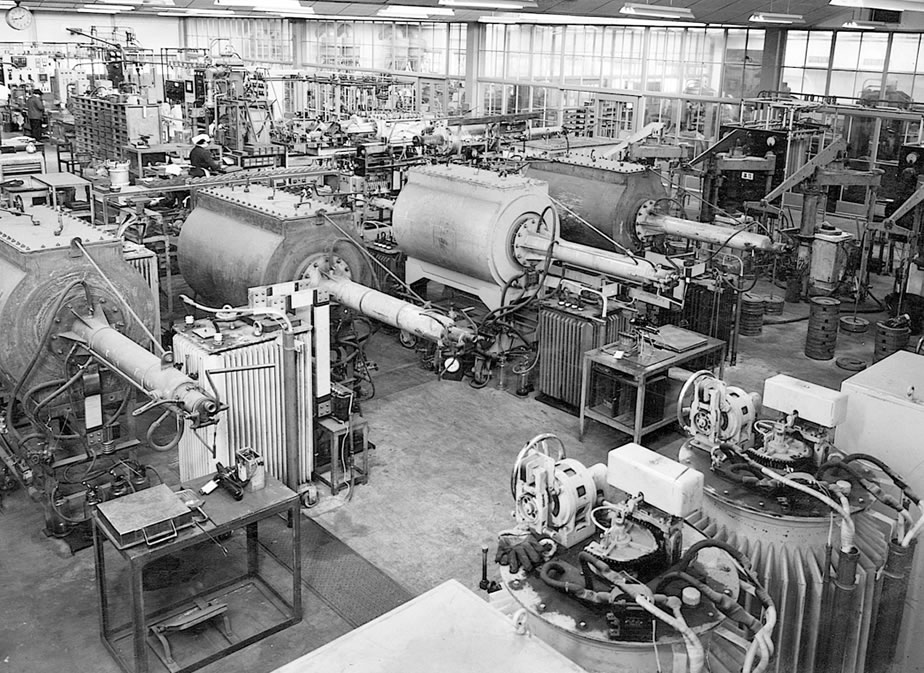
Nation's first Bessel high-frequency vacuum furnace
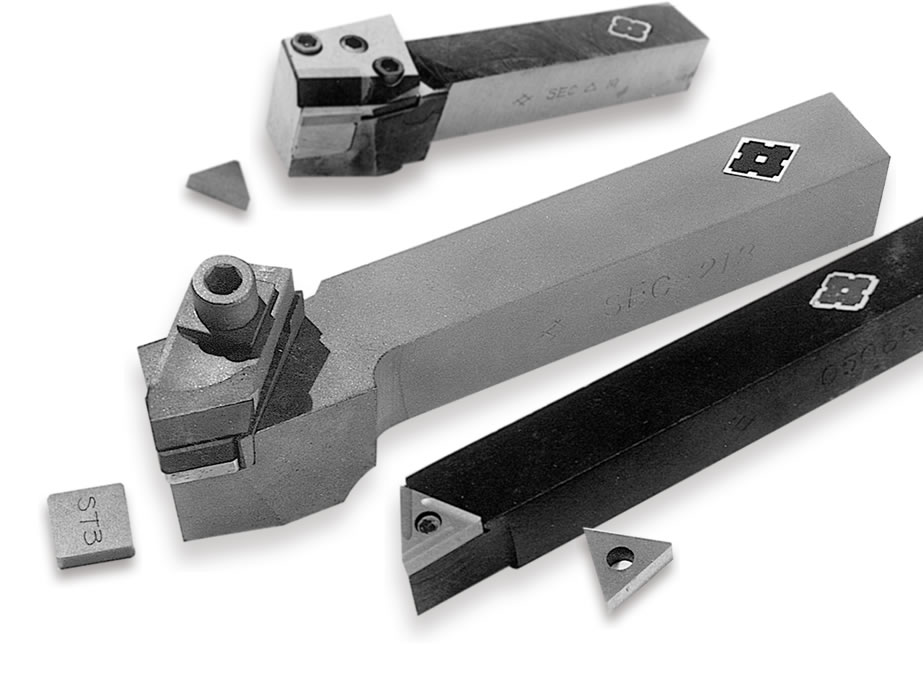
Arrival of SEC Cutting Tools

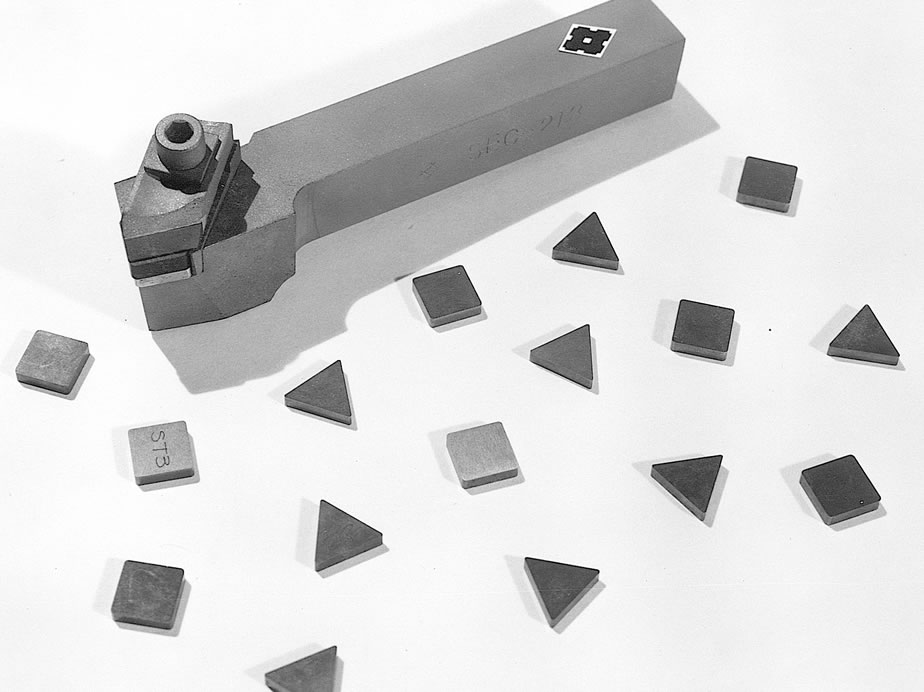
We started to develop throw-away tip tools in the early 1950s, but as a business, 1959 is considered to be the "Starting Year of Throw-away" when "Type 2 SEC cutting tool", a remodeled version of the prototype "Type 1 SEC cutting tool" was released. An eccentric pin version "Type 3 SEC cutting tool" showed up next in 1960, and opened a new era of the throw-away insert tools.

"SEC": An abbreviation of Steady & Easy Clamp, is a generic name of our throw-away insert tools.
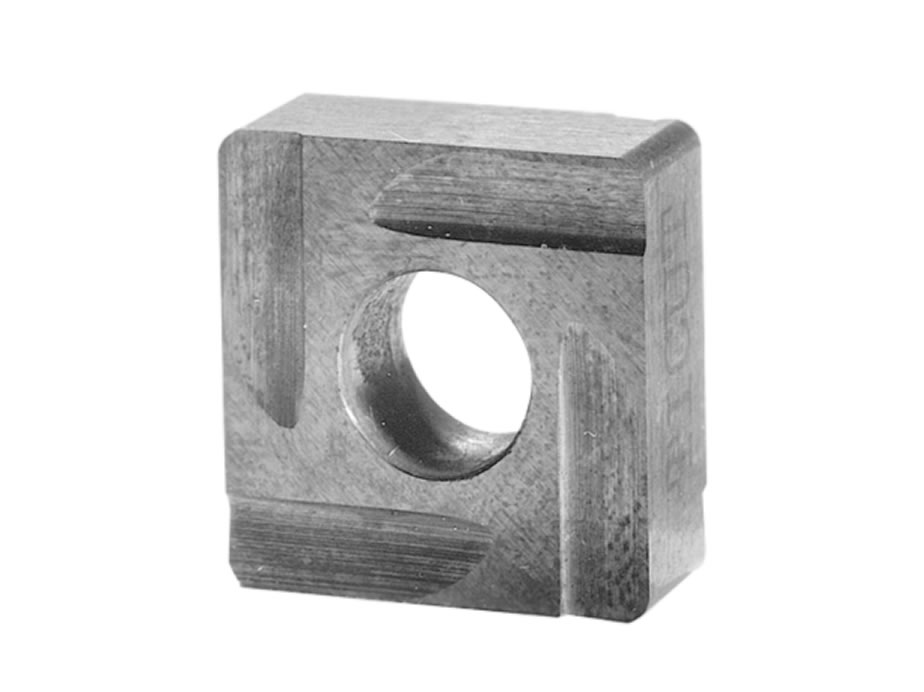
Throw-away insert with hole and ground chipbreakers
The First Domestically Made SEC Cutter
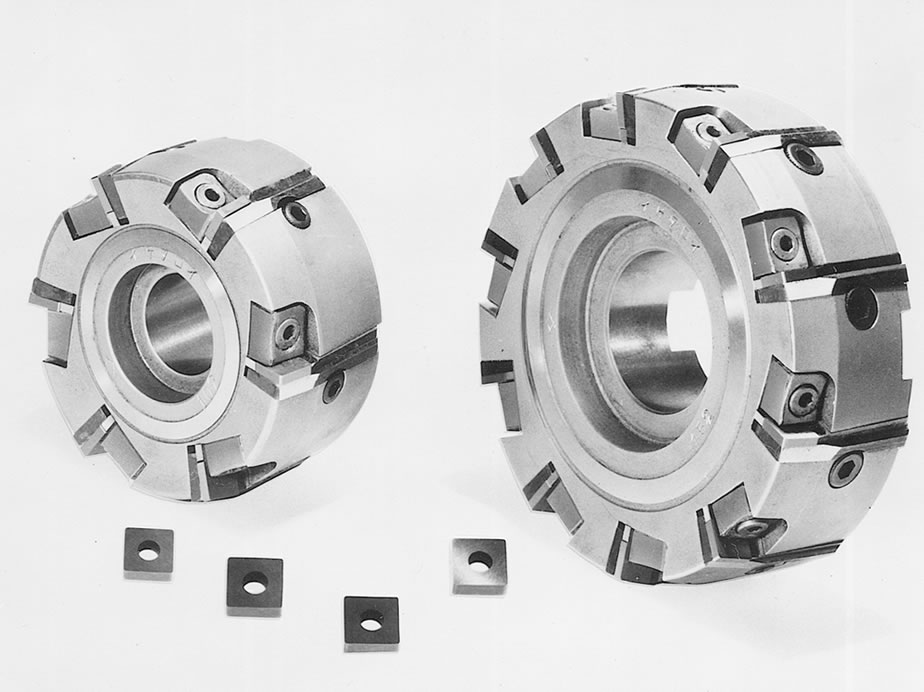
Following turning tools, the throw-away insert concept was adopted to milling cutters and thus, the first domestically made, original designed “SEC M type” indexable cutter was successfully developed in 1961. It was showcased in the 4th International Trade Fair and had attracted public attention.

Birth of ALOX

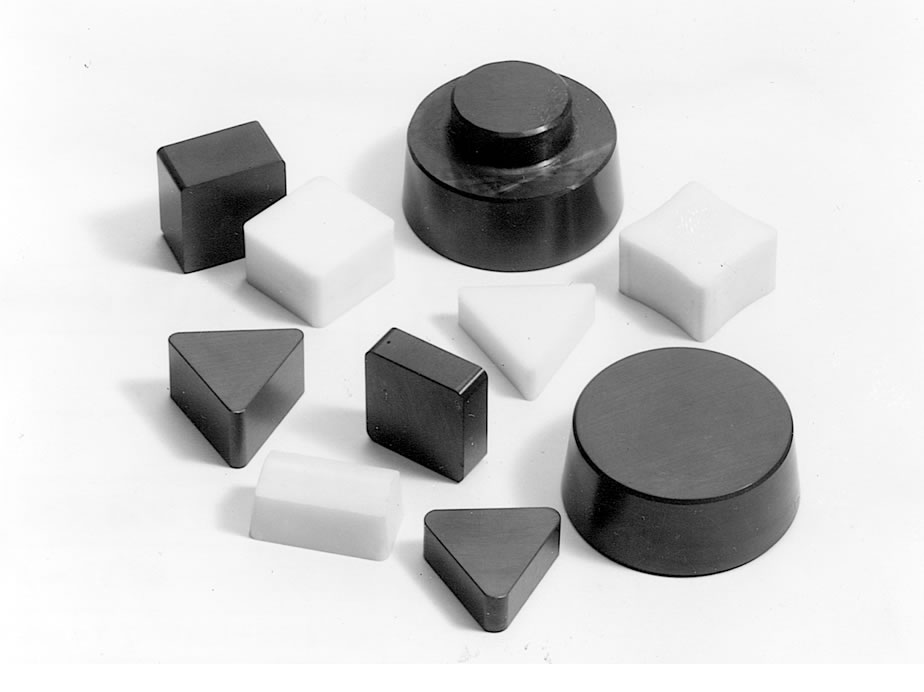
In mid 1950s, we already started to engage ourselves in a research of ceramics for cutting tools. Al2O3-based ceramic "ALOX" was born in 1959, however, it was not durable enough at that time. 20 years later, with the world's first HIP treatment (hot isostatic pressing), ceramic grades "W80" and "B90" were developed ('78 to '79), which finally opened a new era of practical ceramics.

Sumitomo White W80. Sumitomo Black B90
Introduction of Igetaro

In 1960s, fresh ideas for sales promotion and advertising were adopted and the character "Igetaro" was introduced.

The First Domestic Cermet Tool

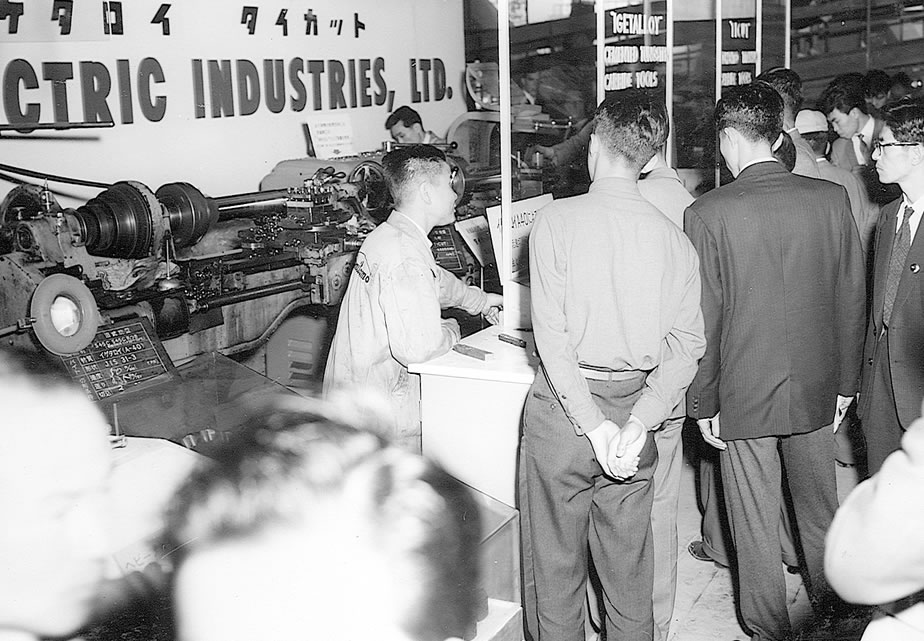
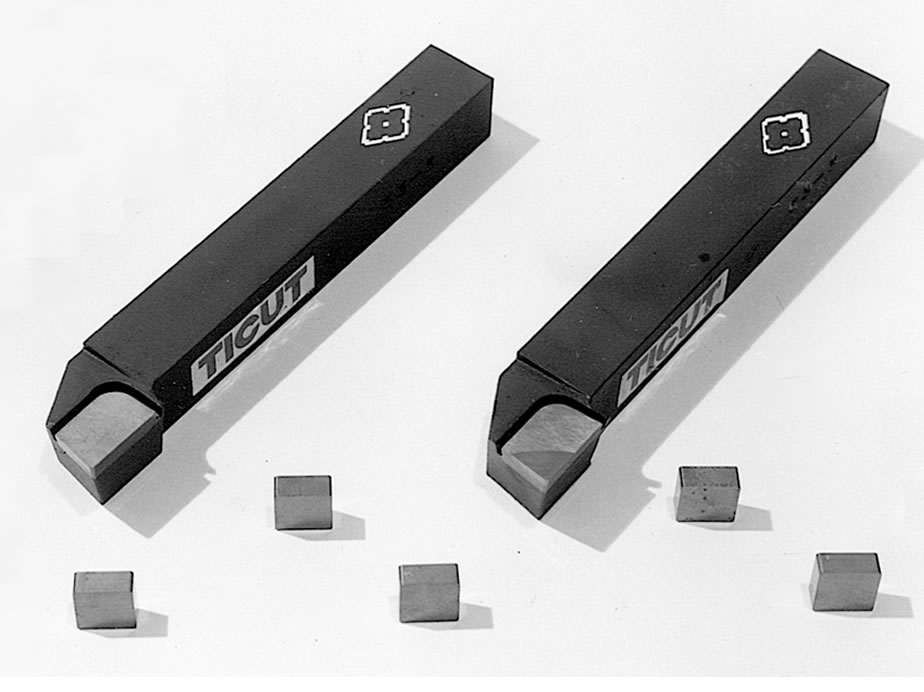
In Japan, the first successful development of TiC-based cermet was released under the product line "TICUT" in 1960. It won the Nikkan Kogyo Ten New Products Award and had opened an era of 3rd tooling material following cemented carbide and ceramic. TICUT cutting demonstration at our booth in the International Trade Fair was crowded with many visitors daily.

The First Domestic Cermet Tool

IGETALLOY Service Car Appears
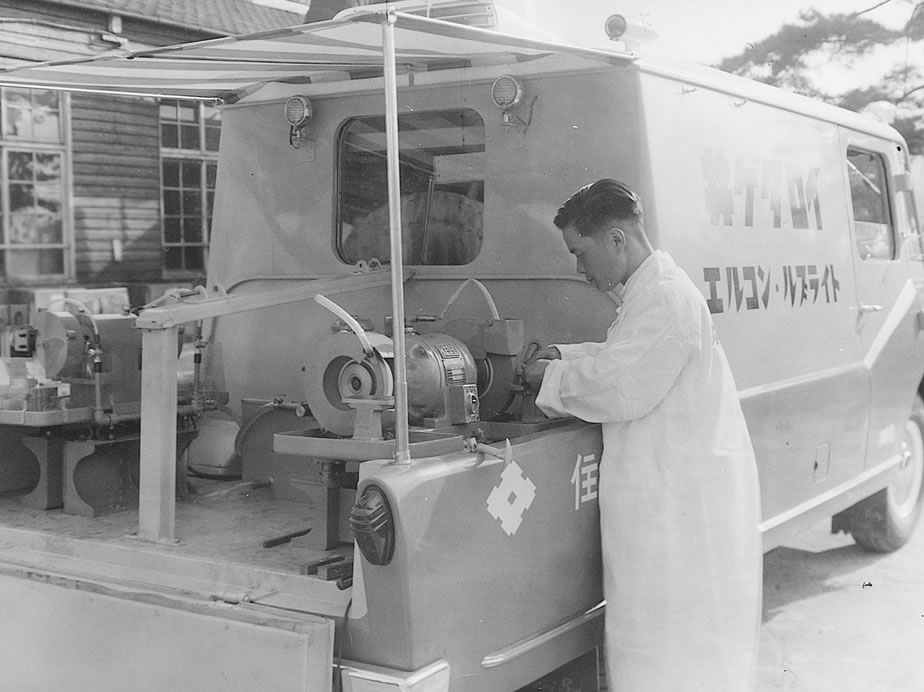
1957 was the year of an industry leading "IGETALLOY Service Car". The car was equipped with a grinding machine and brazing equipment, running around the whole country as "tooling delivery service" for the promotion of IGETALLOY.

Kansai IGETALLOY Association Founded

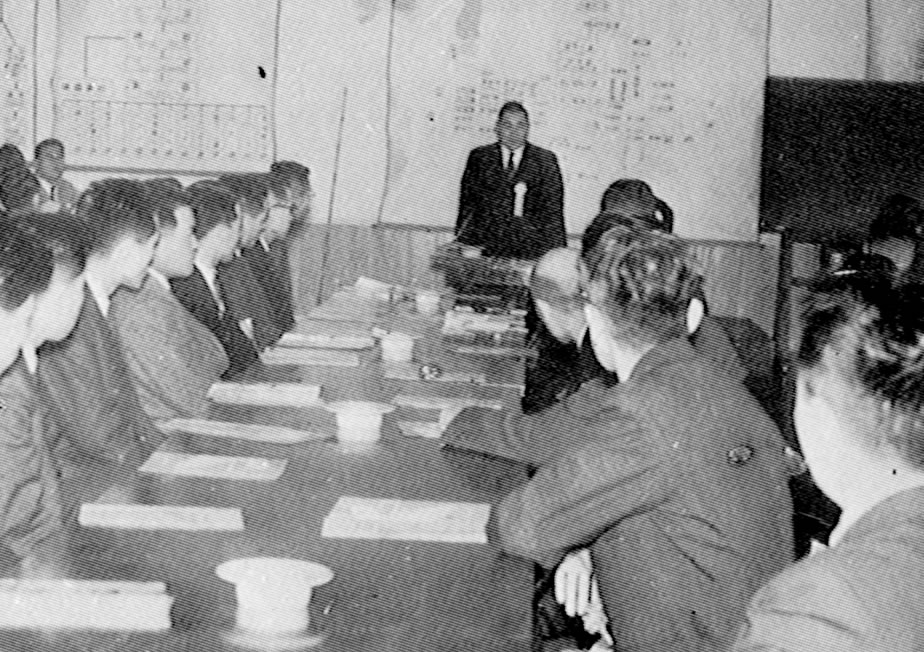
As part of developing the sales mechanism, the Kansai IGETALLOY Association was founded in 1958 and the first general meeting was held in Itami. After which, each main region started to have its own local organization, enhancing the network of our company with dealers.

IGETALLOY News Published

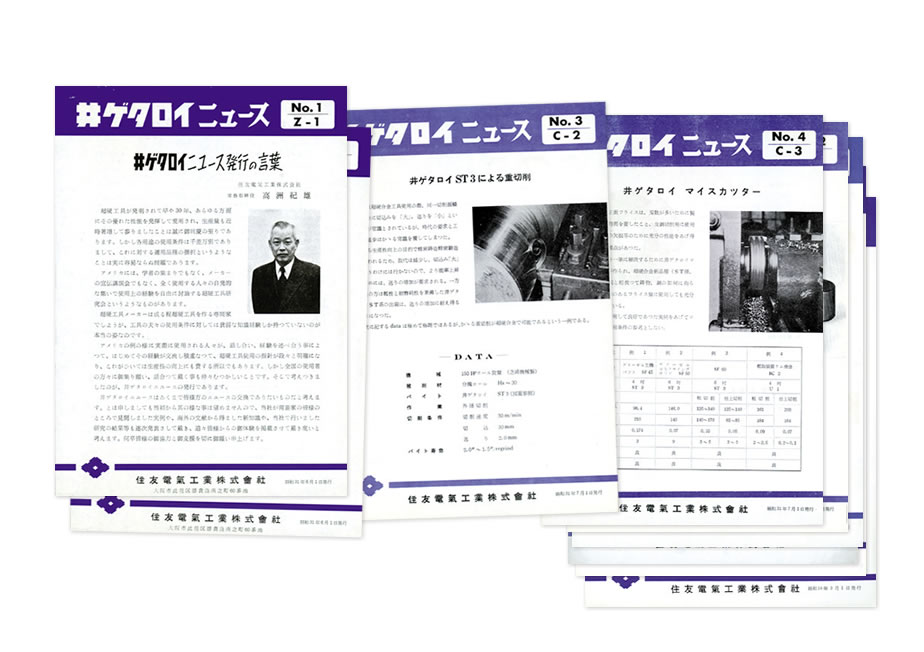
To promote the dissemination and awareness of cemented carbide tools, "IGETALLOY News" was first published in June 1956 and has since been an information magazine that links users with the manufacturer even until today, garnering high reputations both internally and externally.

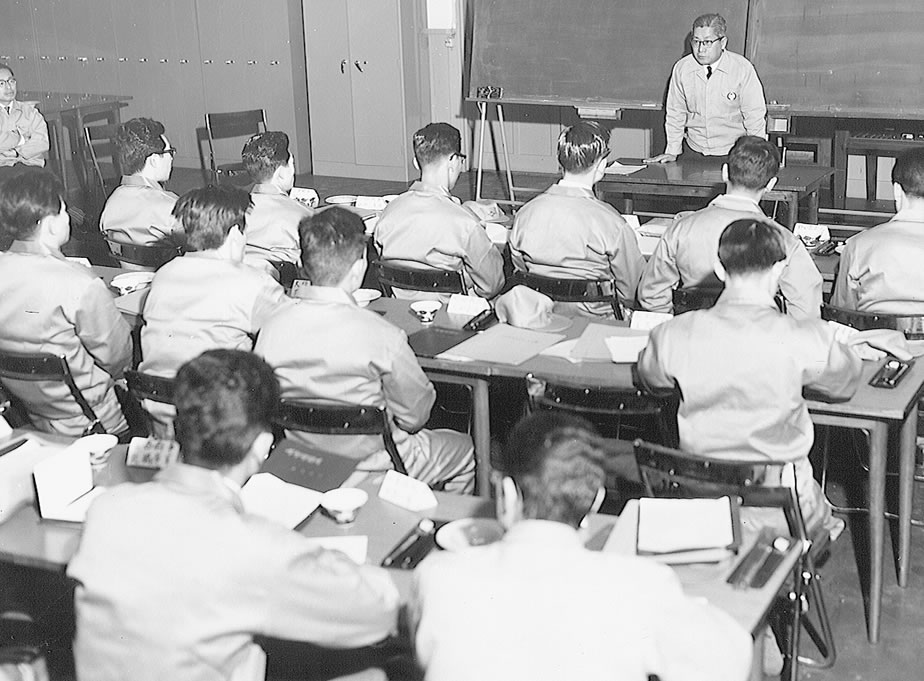
Opening of IGETALLOY School

"IGETALLOY School" opened its doors for the knowledge of the front-line sales persons of distributors and dealers, and the first class was held in Itami Works in 1963. Up till today, it has produced many graduates who are playing an active role in expanding the sales of IGETALLOY. Currently, our Tool Engineering Centers (TEC) take over this function.

Capítulo 3: Aparición de Herramientas con Insertos Desechables

En la década de 1960 se vivió la era de la carrera espacial entre Estados Unidos y Rusia, que comenzó con "La Tierra es Azul" (por el Mayor Gagarin en 1961) hasta el aterrizaje lunar del Apolo 11 (en 1969). Por otro lado, hubo una gran cantidad de noticias nacionales que tuvieron lugar sucesivamente y que atrajeron la atención mundial; incluyendo la inauguración del Shinkansen (tren bala), los Juegos Olímpicos de Tokio y Anpo Toso (campaña nacional japonesa contra el Tratado de Seguridad). La innovación en herramientas de corte vio la introducción de herramientas con insertos desechables en la década de 1960, lo que supuso un cambio significativo en las herramientas de carburo cementado. A la vanguardia de la industria, hemos realizado muchos esfuerzos en el desarrollo y lanzamiento de herramientas SEC- (*) y hemos contribuido a la revolución del mecanizado como "pionero de las herramientas con insertos desechables". Durante este período, se establecieron instalaciones de producción en masa en Kyushu, Hokkaido, etc. para reforzar el desarrollo de IGETALLOY.

(*) Generic name of Sumitomo Electric's throw-away insert tools

Photographs and explanations at that time

Transition of IGETALLOY Trademark

Sumitomo's emblem "#" symbolizes the frame of a Japanese old well. Trademark "#IGETALLOY" after a "Sumitomo's emblem", which is registered in 1938. It was named after a “hanging rack”, which is Sumitomo’s symbol. It was renamed to "IGETALLOY" in October, 1959 and have been used to this date. Respectful of Sumitomo's tradition, inspiration and a spirit of challenge given in the trademark "I GET ALLOY" have been inherited until now and is the spiritual pillar of our Powder Alloy Department.

Development of SEC Tool Holders Type 20/30 Series
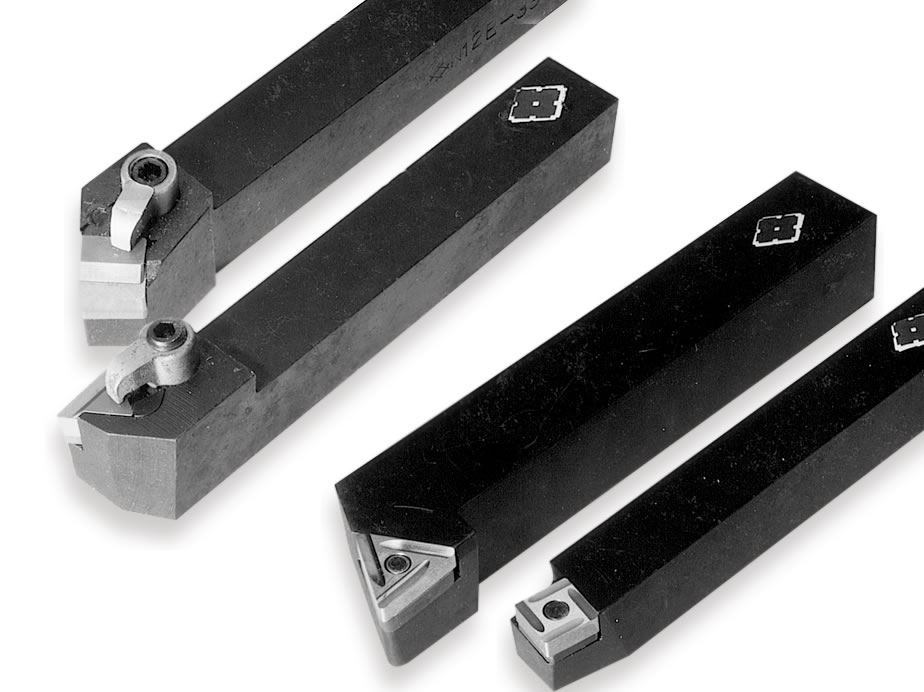
Using the basic "Type 3 SEC tool holder" form, the cam-lock type "SEC-30 tool holder" and clamp-on type "SEC-20 tool holder" were commercialized in 1966, based on new standards (CIS and JIS).

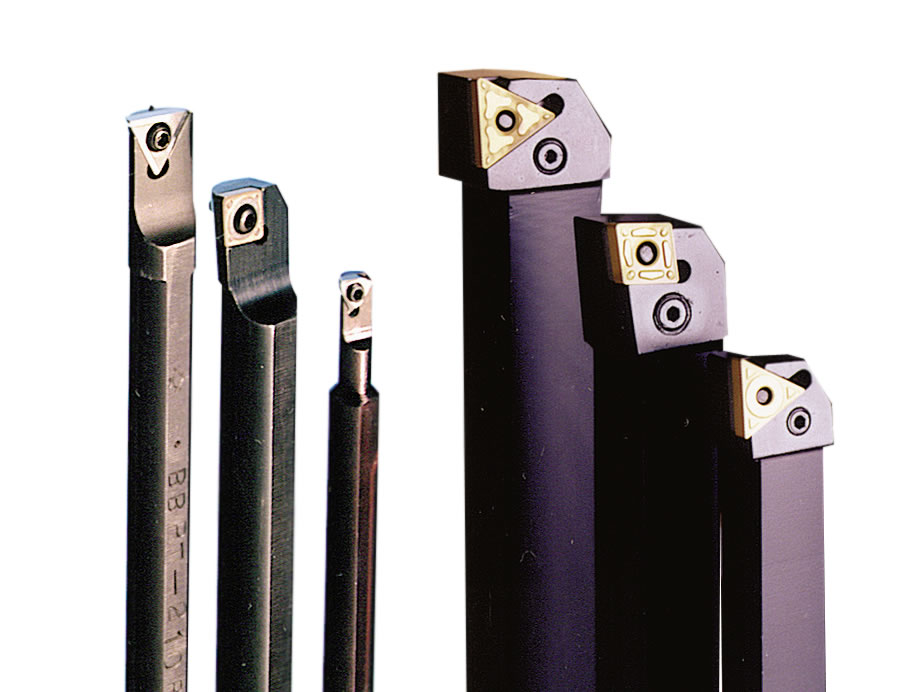
SEC Tool Holder Series

Development of the "SEC-small diameter boring bar" in 1976 and the "SEC-70 tool holder" in 1977, which conforms to the ISO standards, paved the way for the rapid progress of indexable type tools for internal and external turning tools.

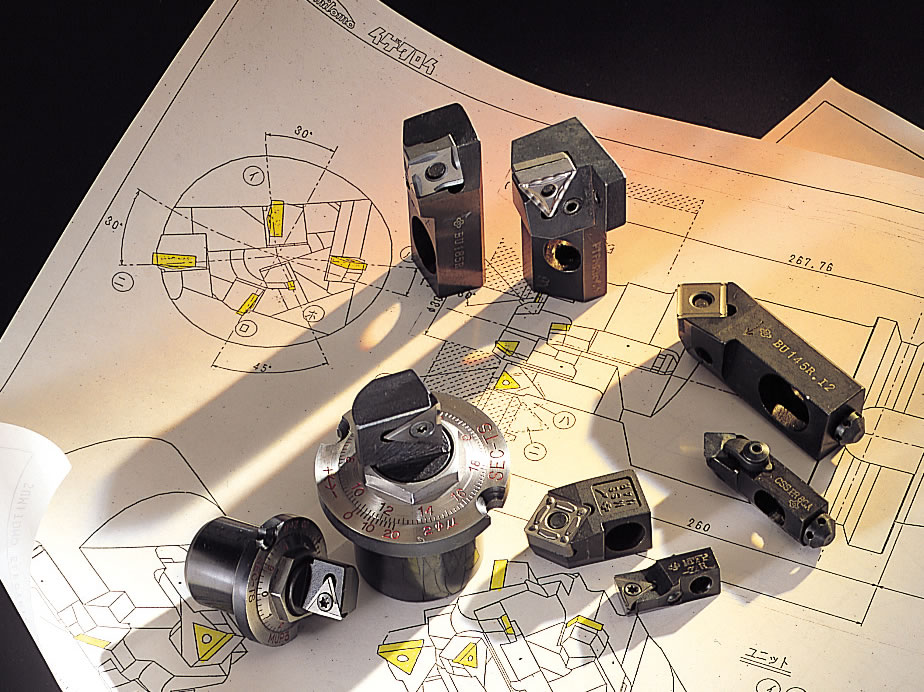
SEC Cartridge Development

Ahead of the industry, the development of the "SEC-Cartridge BU type" in 1968 and the "SEC-Micro Unit MP type" in 1971, were recognized as compound tooling for significant reduction of machining time.

PGM Cutter Insert with Double Sheer Clear Cutting Edges (CSP53R)
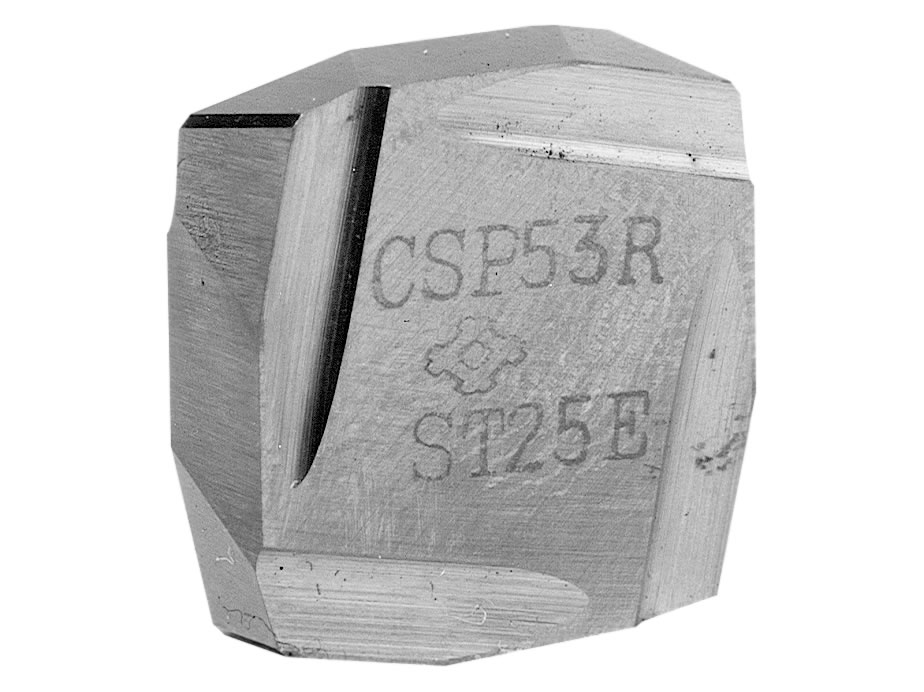
SEC-MILL High Clear Series Takes The World by Storm
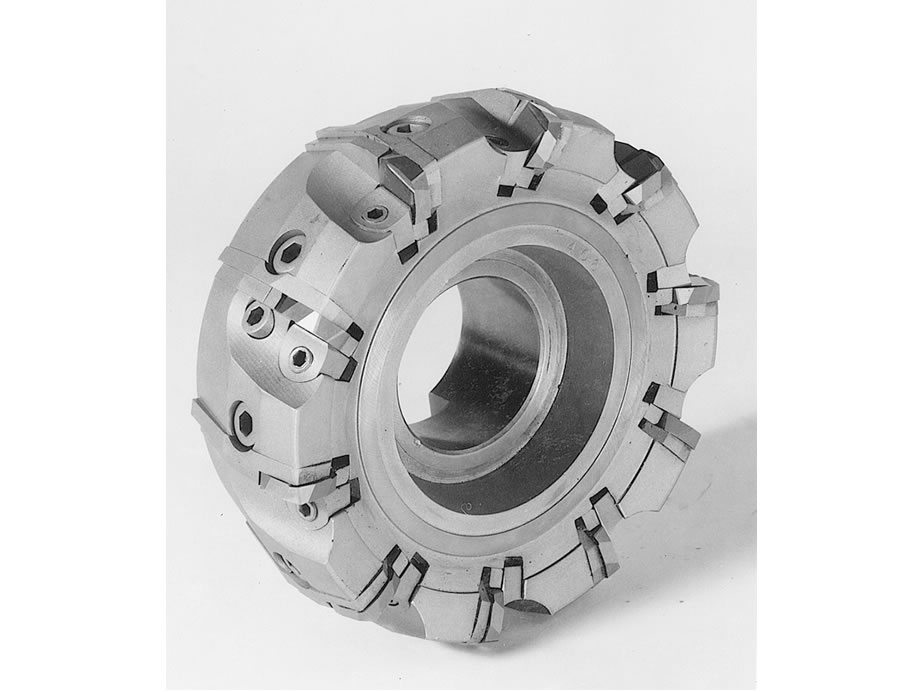
Applying the development experience of the first domestic made SEC cutter, 3 series of the unique and innovative "SEC-MILL High Clear Series" were released in July 1966. Among the series, the PGM type was the most popular and dominated the industry as a bestselling product.

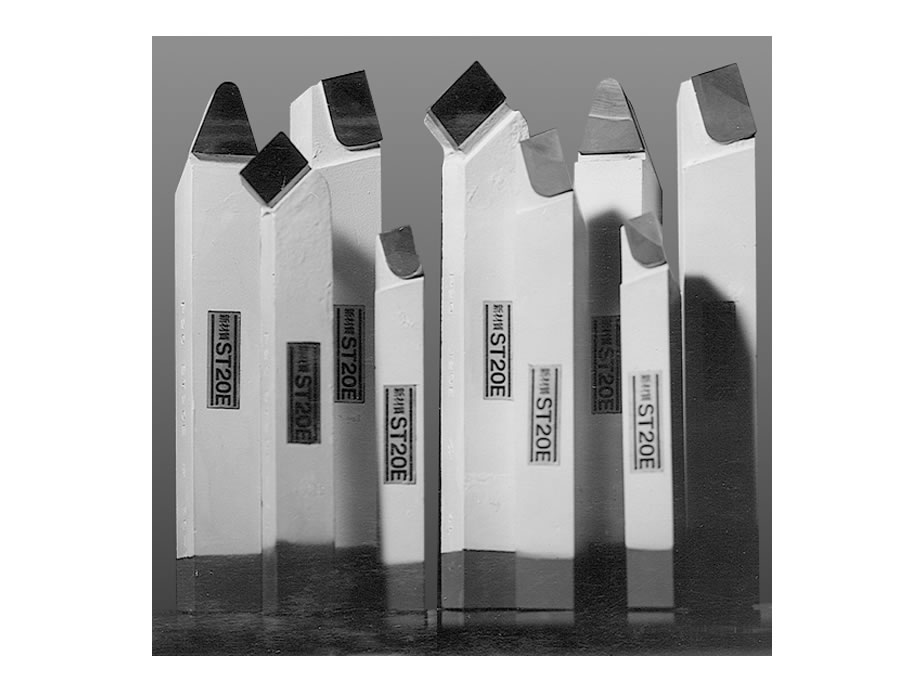
IGETALLOY "E Series" Development

In the 1960s, IGETALLOY new "E Series" grades (ST20E / U10E / G10E) were developed in succession and were mainly used for brazed cutting tools and throw-away tips. They are also stored in the "Time Capsule EXPO70" to commemorate the Osaka Expo (in Osaka Castle Park).

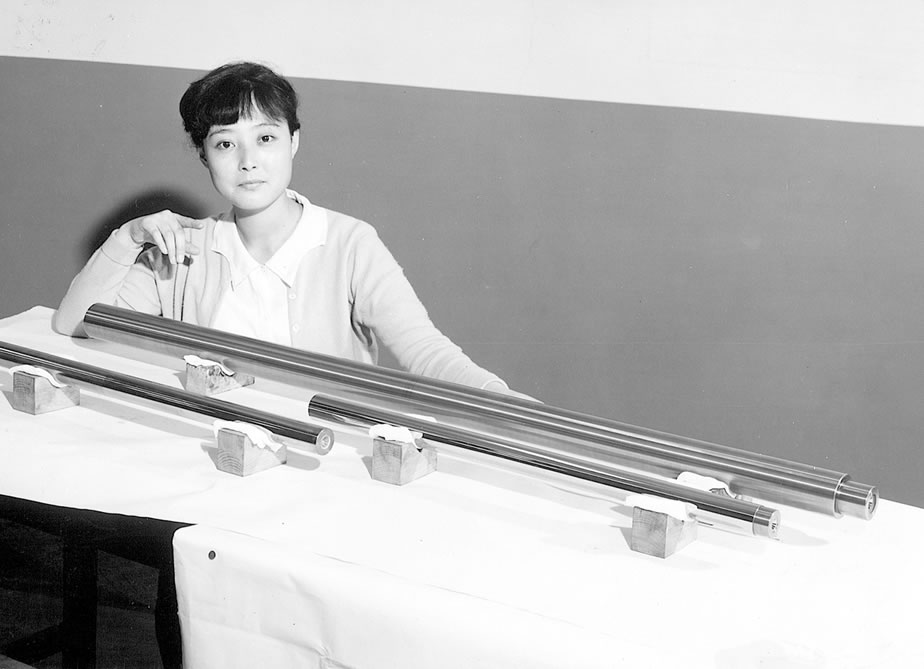
IGETALLOY Long Roll

For the purpose of making large sized alloys, we manufactured the nation's largest cemented carbide roll (60mm diameter × 1,400mm length) using a static pressure mold (rubber press) around 1962 and received a Top Ten New Product Award from Nikkan Kogyo the next year in 1963.